GreenLife score
Electronics are a mix of metals worth recovering (copper, gold, aluminum, steel) and things that do harm in a landfill or a garbage truck: lead in old TV glass, mercury in older flat-panel backlights, and lithium batteries that can start fires when crushed. That’s why about 25 states have e-waste laws, and many of them ban TVs and computers from the trash outright.
Most of it is free to drop off. Phones, laptops and loose batteries have their own rules, so this guide covers everything else.
Where each item goes
| Item | Best first option | Typical cost | Watch out for |
|---|---|---|---|
| Flat-screen TV | State program site or county e-waste day | Free to $40 | Best Buy charges about $30 in most states |
| Cables, chargers, cords | Best Buy or Staples drop-off bin | Free | Never curbside: they jam sorting screens |
| Printer | Best Buy, Staples or county e-waste day | Free | Remove ink or toner first |
| Ink and toner cartridges | Staples, or the maker’s prepaid mail-back | Free | Some stores give rewards credit |
| Small kitchen appliances | County drop-off or scrap metal bin | Free | Take out any removable battery |
| Game console, smart speaker | Best Buy, or the maker’s mail-back | Free | Factory reset and sign out first |
| Old tube (CRT) TV or monitor | County e-waste day or certified recycler | $20–$60 | Several pounds of lead in the glass |
Typical 2026 options and fees; retailer policies vary by state and store. Best Buy limits drop-offs to about three items per household per day.
TVs and monitors
TVs are the one item that regularly costs money, because the glass and plastic are worth less than the labor to take them apart. Best Buy accepts most TVs and monitors in store but charges about $30 per set in most states; a few states waive the fee, and in some states stores don’t take TVs at all. Check its recycling page for your state before you load the car.
If you live in one of the states with an e-waste law, such as New York, New Jersey, Minnesota, Washington or Oregon, manufacturers fund collection sites and you can often drop a TV off free, though some state programs run short of money late in the year. Your state environmental agency lists the sites. Counties without a permanent site often run a free or low-cost e-waste day once or twice a year.
Old tube TVs and CRT monitors are heavier and harder to place. The glass holds several pounds of lead, so they should never go in the trash or be broken up at home. Best Buy takes only smaller tube sets, so the county or a certified recycler is the usual route, at $20 to $60 if there’s a fee.
Printers, ink and toner
Pull the cartridges before you drop off the printer. Empty ink and toner cartridges go back to Staples or Office Depot drop-off boxes, or to the manufacturer: HP, Canon, Epson and Brother all run prepaid mail-back programs for their own cartridges. Staples’ rewards program pays store credit for some returned cartridges, with monthly limits and a purchase requirement, so it’s worth a look if you buy ink there anyway.
Cables, chargers and small appliances
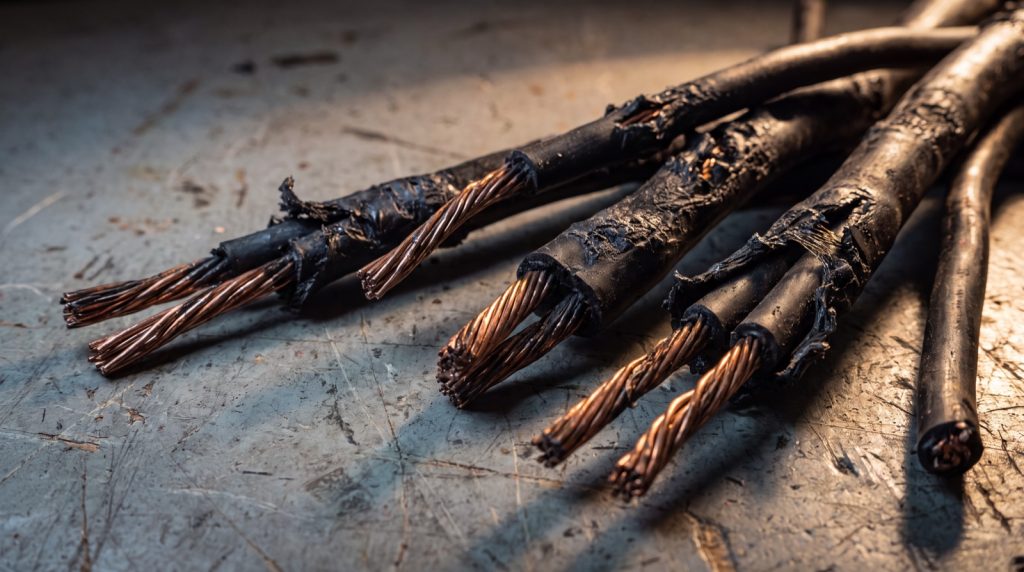
Cords and chargers are mostly copper, which is why they’re worth collecting and why they’re a menace in curbside bins, where they wrap around the sorting machinery. Keep a shoebox for them and drop the box off at Best Buy when it’s full.
Toasters, coffee makers, fans and vacuums are mostly metal and plastic with a small motor. Many county drop-off centers take them in the scrap metal pile, and Best Buy accepts many of them. Cut the cord off and add it to your cable box if the recycler asks you to separate them.
Game consoles and smart speakers
These contain personal data and sometimes a lithium battery. Before you drop one off, sign out of every account, deregister it from the maker’s app, and do a factory reset. Amazon and some other device makers run free mail-back recycling for their own devices. Controllers with built-in rechargeable batteries go to an e-waste drop-off, not the trash.
-
Check if it still works
A working printer, console or TV is worth more donated or sold. Charities and schools take working electronics far more often than broken ones.
-
Wipe it
Sign out of accounts, factory reset, and remove memory cards, discs and ink.
-
Pull loose batteries
Remove removable batteries and drop them off separately. Tape lithium battery terminals.
-
Bundle by type
Cables in one box, small appliances in another. Drop-off sites move faster when you arrive sorted.
-
Pick a certified recycler
For anything a store won’t take, look for R2 or e-Stewards certification. Both require the recycler to track where material goes and handle hazardous parts properly.
Before you recycle: repair or resell
Recycling recovers metals, but most of a device’s environmental cost is in making it. A printer that needs a $15 roller kit or a TV with a failed power board that a repair shop can swap for $80 to $150 is worth fixing if the rest of it works. When you do replace something, refurbished models from the manufacturer or a large retailer usually come with a warranty and cost 20 to 40 percent less than new.
-
Can I put old electronics in the trash?
In about 25 states, many electronics, especially TVs and computers, are banned from the trash. Even where it’s legal, batteries inside can start fires in garbage trucks, so drop them off instead.
-
Does Best Buy charge to recycle a TV?
In most states, yes, about $30 per TV or monitor. Some states waive it, and a few stores don’t accept TVs at all, so check Best Buy’s recycling page for your state.
-
Are electronics recycling events free?
County and city e-waste days are usually free for residents, though some charge $10 to $40 for TVs. Bring proof of address.